Amateur leagues in Poland run mostly on clay through the summer and indoors through the winter, with hard courts in between and grass as a rare treat. The same 4.0 player can win comfortably in June and lose the rematch in January, having played roughly the same tennis both times.
The surface is doing that, and it is doing it in ways you can plan for.
How the four surfaces compare
| Surface | Pace | Bounce | Typical rally | Rewards |
|---|---|---|---|---|
| Clay | Slow | High | 6-10 shots | Patience, depth, fitness |
| Hard | Medium | True, medium | 4-6 shots | All-round game |
| Grass | Fast | Low, variable | 2-4 shots | Serve, low volleys |
| Indoor | Fast | True, low | 3-5 shots | First strike, timing |
Clay: patience wins
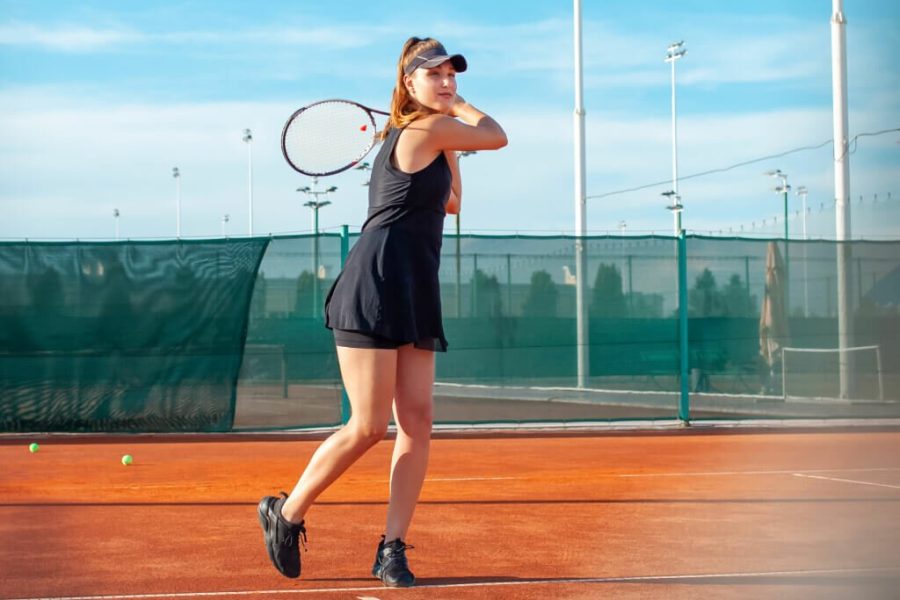
The ball bounces high and slow, sliding becomes part of footwork, and a point that would be over in three shots elsewhere lasts eight. Winners are harder to hit and errors are easier to make, which flips the arithmetic of the whole match.
Plan: aim for depth and height rather than pace. Use the drop shot when your opponent camps two metres behind the baseline, because on clay they cannot recover the way they would indoors. Stop trying to end points early and accept that you will hit more balls in a set than you are used to.
Kit: herringbone soles. Clay in a smooth shoe is an injury waiting for a wet Tuesday.
Hard court: the honest one
Medium pace, a true bounce and nothing to blame. What you can do, you can do here, and what you cannot do shows up within two games.
Plan: play your natural game and pick the moments to attack. A good approach shot is rewarded and a bad one is punished, more clearly than on any other surface. If you have a plan for an opponent, this is where it survives contact.
Kit: real cushioning. Hard courts are hard on knees and on the balls, which go dead noticeably faster.
Grass: short and low
Low, fast, occasionally unpredictable bounces. Rallies are short and the serve decides more points than anywhere else. Anything that skids stays skidded.
Plan: stay low, shorten your backswing, and come to the net behind anything deep. Slice works here in a way it does not on clay. Accept in advance that two or three points a set will be decided by the ground rather than by either player.
Indoor: no wind, no sun, no mercy
Indoor halls in Poland are usually hard or carpet: fast, consistent and completely without excuses. With no elements to blame, a match turns into a test of the first serve and the first strike after it.
Plan: be aggressive on serve and on return, keep the ball flat and take time away. Warm up properly before the first game, because the pace catches cold legs and January legs are cold.
Kit: non-marking soles, or the club will have a view about it.
The matchups that decide league seasons
Two patterns come up again and again in amateur divisions.
The counterpuncher on clay. A steady player who returns everything is worth half a level more on clay than indoors. If you meet one in June, plan to move them side to side rather than to hit through them.
The big server indoors. A serve that is useful on clay becomes a weapon in a hall. If you are returning one in winter, stand further back on the first serve than feels comfortable and commit to blocking it deep.
Before your first league match on a new surface
- Book a practice hour on that surface, even alone with a basket of balls. Twenty minutes of bounces is worth more than an hour of reading.
- Check the shoes. Clay needs herringbone, indoor needs non-marking, and hard courts need cushioning.
- Lower your expectations for the first set and raise your patience for the second.
- Take a spare set of balls in winter. Cold balls behave like a different sport.
Leagues in Open Tennis League run across all of these, and the fixture tells you the surface before you agree the time, so you can decide whether you want that match in that hall. How a league season works explains the fixtures, the guide to levels covers where you fit, and the page for players is where a season starts.
On this website you can also switch the colour scheme to the surface you play on.